
Slick Tricks For An Efficient Fix - Global Mining Review: Mar/Apr 2020
Posted on 05/07/20 in: Published Articles | | Mining | Author: Michael Holloway, Bret Jenkins, Don Howard
Michael D. Holloway (5th Order Industry), Bret Jenkins and Don Howard (Whitmore & Jet-Lube), USA, outline the ways in which the operational efficiency of underground and opencast mines can be improved with the use of lubricants.
Both underground and opencast mining operations provide a host of reliability challenges due to the environment of the workspace and the demand the operators place on the equipment. There are several ways in which productivity can be improved through lubrication selection and management.
Using the best performing oil or grease may not be enough, but incorporating a lubrication management system based on sound maintenance strategies can help reduce the overall spend. Establishing increased productivity through lubrication management considers several aspects: selection, application, storage, condition monitoring and continuous improvement. This article gives an overview of what can be done for short, mid and long-term improvements.
Lubricant Selection
Lubricants are designed to solve problems as a result of heat, friction, wear and contamination. For heavy equipment, most problems can be characterised into three main groups:
- Excessive load and vibration: the vibration and force applied to a bearing or journal that exceeds the load-carrying capability of the grease. The result is metal-to-metal contact, premature wear and increased heat. This is often seen in bucket pins and bushings, as well as, bearings in rock crushers. In these applications OEMs often recommend lubricants with moly, a low friction solid lubricant, such as Whitmore® Caliber 5M (a 5% moly grease.)
- Excessive or localised heat: excessive heat can be generated during extended operation, or localised heat can result when metal asperities collide, producing pressures in excess of 500 000 psi. Such extreme pressures create heat which break down the grease, leading to cold welding or galling; a form of wear caused by adhesion between sliding surfaces. Thermally stable lubricants maintain consistency and exceptional load carrying capabilities which excel in this situation.
- Contamination: sand, mud, water and steam can wash away grease, leaving metal unprotected. Dust, fibres and abrasive particles can combine with grease and grind away metal. Acids, caustics and cleaning solutions can break down grease and corrode metal.
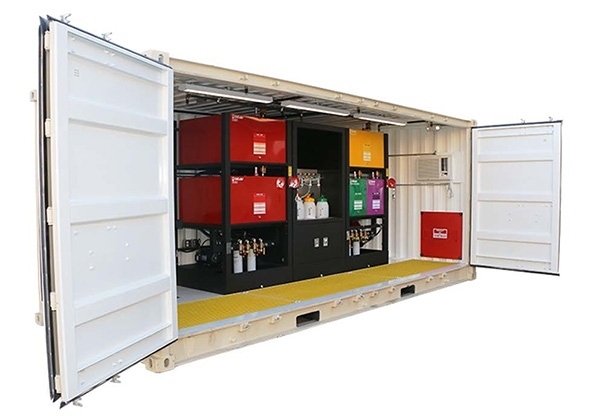
Figure 1. OilSafe® Satellite Lube Room with OilSafe Lubrication Work Center. Units like these help expand reliability and provide organised, contaminate-free lubricant storage and dispensing to remote locations or where indoor space is limited
When selecting or replacing an existing product, consider the physical performance characteristics of the grease or oil. A few rules of thumb to go by when beginning the productivity journey are as follows:
- Synthetic-based oils and greases often perform better and last longer than mineral-based products when put in high heat/high stress environments, but they will cost more. Their value can often be seen in extended drain intervals and component life and especially in conjunction with a high efficiency desiccant breather where oils are concerned.
- Strive to use the absolute minimum of different oils and greases. Stay within the viscosity requirements yet look to consolidate as much as possible, this will make storage, application and procurement much more streamlined.
- When selecting a grease, the base oil viscosity is vitally important. Higher base oil viscosity for high load and low speed, lower viscosity for high speed applications.
- Examine past maintenance records and conduct informal interviews with the operators and maintenance staff. Often, they can provide true application experience about a certain product that is not immediately recognised.
- Refer to the technical data/product sheet for the product performance assessment and specifications it meets. The lubricant sales representative or distributor can point you in the right direction.
- Compare standardised testing methods ASTM, DIN and ISO procedures. Non-standardised tests are usually biased and often misleading. Many lubricants tested by non-standard methods are often non-conforming with industry norms and OEM requirements.
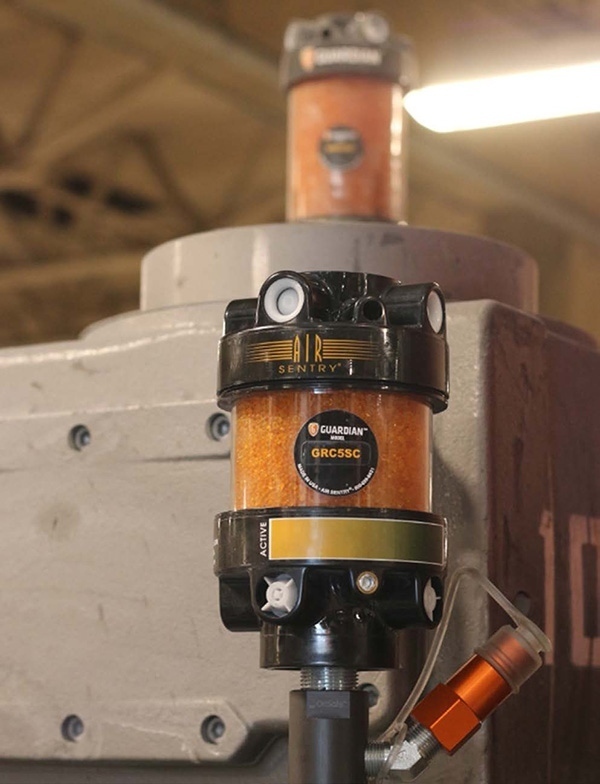
Figure 2. Air Sentry® Guardian® Desiccant Breather. Breathers like these in conjunction with OilSafe Adapters reduce contamination, moisture and particulate in equipment.